AI or KI. This trend topic par excellence has different names in various languages, but everyone knows what is meant.
Artificial intelligence is ubiquitous in our everyday lives, and “Alexa” or “Siri” alone have become indispensable for most people.
Among other things, surveys show that the logistics industry sees great potential in AI. In 2022, 22% of logistics companies used AI, and almost 60% were convinced that AI will be an important factor in the future of the industry.
Doubts in society
But why are 56% of logistics companies certain that digitalization plays a major role, while the figure across the overall economy is 32%? Many areas of responsibility in logistics are logical, analytical, and predictable. These are all qualities that AI already masters.
Nevertheless, many people have doubts, as more and more responsibility is being placed in the hands of robots and software. In addition, one could argue that AI takes away jobs and creates a high dependency on functioning technology. Since AI is currently being developed further all the time, it is difficult to predict how advanced AI will be in 20 or 30 years.
Some are somewhat deterred by this, while others use the AI already available as effectively as possible to increase productivity and profit.
Some AI innovations have been used by major logistics companies for quite some time.
For example, “Vision Picking” is an AI solution used in DHL and DB Schenker logistics centers. The technology behind it is called augmented reality (AR). Glasses or a glove scan all the key information on a parcel. The glasses project this information into the environment in a short time and can, among other things, show fast routes to the destination in the warehouse. This saves employees from having to search for the data and enables them to focus better on their work.
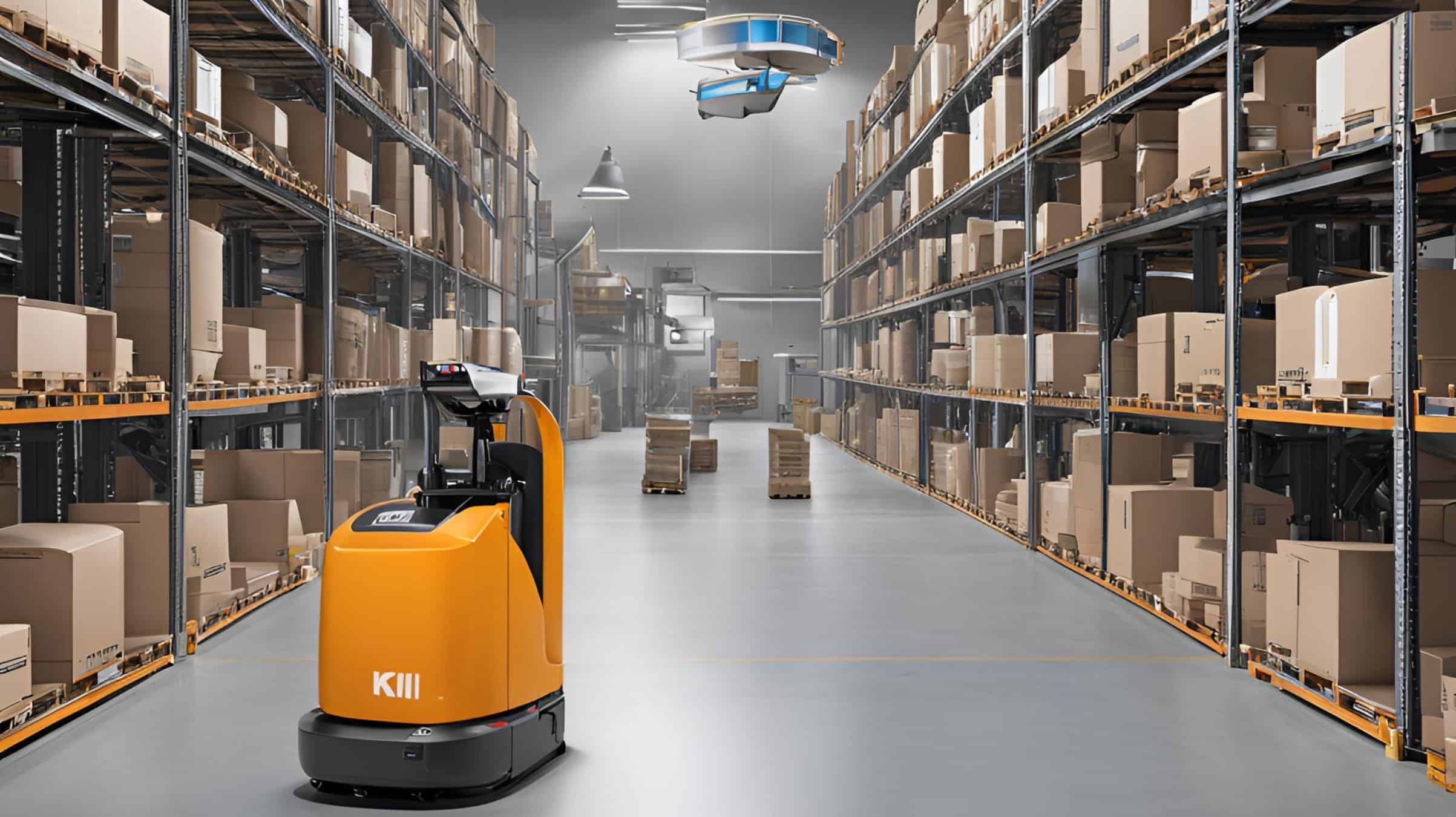
Another innovation that has been in use at DHL for a few years is the “Effibot” from Effidence. It is an autonomous mobile robot (AMR) that serves as a pack mule in the warehouse. The technology is programmed so that the AMRs automatically follow warehouse employees. The robot offers a large storage surface that is used to transport heavy parcels from A to B in the warehouse. This has a positive effect on employees’ health and promotes productivity.
As the examples show, AI offers opportunities for smooth day-to-day operations. The innovations that can be implemented today have positive effects on logistics, such as cost and time savings. The benefits in the industry are unmistakable, which is why we at startport, among other things, support logistics startups with AI approaches in finding the right partners. One example is the startup ForkOn, which automates forklift fleets. Workflows and processes are optimized through data analysis in the form of AI algorithms. The goal is to increase productivity in intralogistics. A key sign of AI’s relevance is also reflected in the partnership between ForkOn and Duisburger Hafen AG (short: duisport).
(Source: Bitkom study “Digitalization in Logistics”, October 2022)