The world of work is undergoing a structural transformation. On the one hand, technological innovations such as automation and digitalization are driving changes. On the other hand, societal upheavals such as the demographic-driven shortage of skilled workers, the increasing importance of self-determination in the workplace, and the call for lived diversity are emerging. The New Work concept is central to this development, addressing the design of work while considering flexibility, self-determination, and process digitalization. The focus is not only on digital tools and modern workplaces but creates a completely new understanding of how work is structured and what significance it can hold in people’s lives.
The social philosopher Frithjof Bergmann, a pioneer of the New Work idea, emphasized: “Work must strengthen people, not weaken them.”
The transition from the traditional work model – often referred to as “Old Work” and characterized by fixed working hours and clear hierarchies – is already in full swing. The established structures are increasingly evolving towards a more flexible design: mobile working, increasing personal responsibility, and the ability to shape one’s daily work individually.
New Work arises from technical, economic, and social developments. The increasing digitalization of the working world – for example, through cloud services, video conferencing, and project management tools – makes location-independent and time-flexible work possible. In the context of the digital design of work, one speaks of “Work 4.0,” a component of New Work.
New Work is a work model that not only appeals to employees but also helps companies react flexibly and promptly to a changing environment. More and more employees are striving to balance work and private life, desiring meaningful tasks and a higher degree of self-determination. Companies can specifically address these expectations through New Work measures to sharpen their profile as an attractive employer.
However, due to flexibility and freedom in the work environment, employees may find it harder to maintain a clear separation between professional and private life. The private phone becomes a work phone, and in the home office, it’s difficult to distance oneself from everyday tasks like childcare or household chores. This makes it harder to emotionally and cognitively switch off after work. At the same time, a high degree of self-discipline and personal responsibility is required. Advancing digitalization necessitates technological competencies; if these are insufficient, workflows can be significantly impaired.
In the New Work approach, environmental aspects are now also coming into focus: Thanks to flexible, location-independent work practices, employees commute less frequently, which noticeably reduces traffic and CO₂ emissions. In 2023, for example, 3.96 million commuters traveled more than 50 kilometers, and 2.28 million commuters traveled more than 100 kilometers to work. By eliminating these often long commutes, an average of €750 and 6.3 kilograms of CO2e can be saved. However, it has been shown that team communication is sometimes hampered by remote work due to the lack of personal interaction – the kind of interaction that could emotionally relieve colleagues.
One way to work flexibly and creatively while fostering spontaneous exchange across departmental boundaries within the framework of New Work is Activity-Based Working. This concept relies on flexibly usable areas that are oriented towards specific activities and deliberately foregoes fixed workstations. Thus, there are special areas for focused work, team meetings, phone calls, or creative collaboration. The office space is used dynamically. Clearly defined work areas not only promote productivity but also strengthen employees’ concentration and individual development. A fixed component of this work concept is the Clean Desk Policy. This means leaving one’s workstation tidy and orderly at the end of the day – in the spirit of a flexible and respectful work environment.
Coworking forms another core element of modern New Work approaches: In open, shared spaces, professionals from various industries work together flexibly and benefit from numerous opportunities for professional and personal exchange. In addition to contemporary infrastructure – from high-speed internet to (interactive) whiteboards and fully equipped meeting rooms – the networking of coworkers is therefore paramount. The open atmosphere creates space for new impulses and interdisciplinary collaboration. Thanks to flexible booking models, coworking offers a sustainable alternative to the classic office – especially in central locations with optimal connections to public transport and the road network.
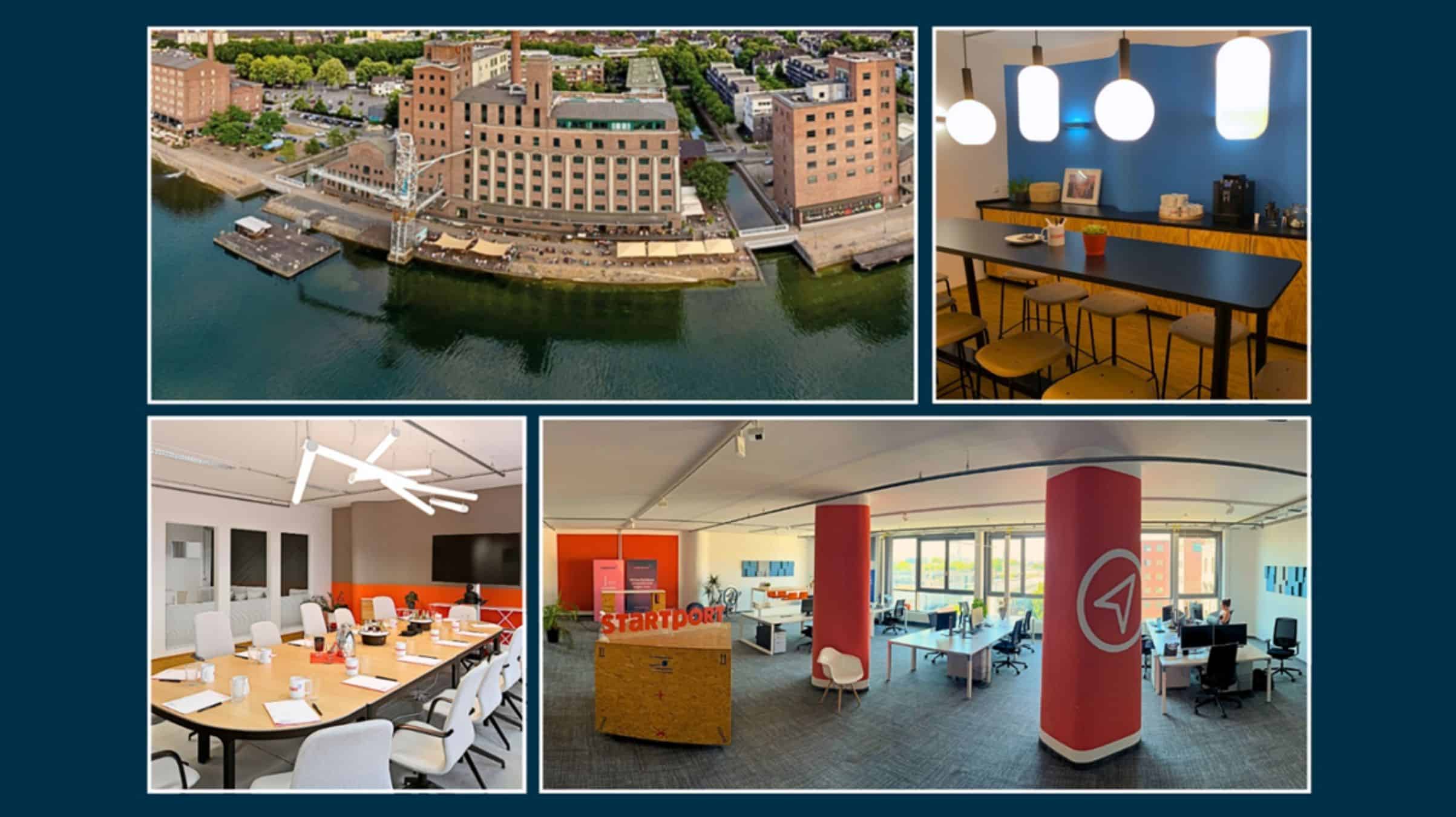
How Activity-Based Working and Coworking can be practically integrated is demonstrated by startport at Duisburg’s Inner Harbor: The company offers a wide range of workspaces – from quiet individual desks for focused work to group rooms for meetings and spacious event areas for workshops and networking events.
New Work creates new freedoms in work design but demands more personal responsibility and a shift in mindset from both companies and employees – something you can experience for yourself at Duisburg’s Inner Harbor; feel free to visit!