This Article at a Glance
- Seaports connect international trade routes with national logistics networks.
- Inland ports handle the distribution of goods in the hinterland and link waterways, rail, and road.
- Together, they form an efficient transport chain from overseas trade to the end customer.
What does a direct comparison look like?
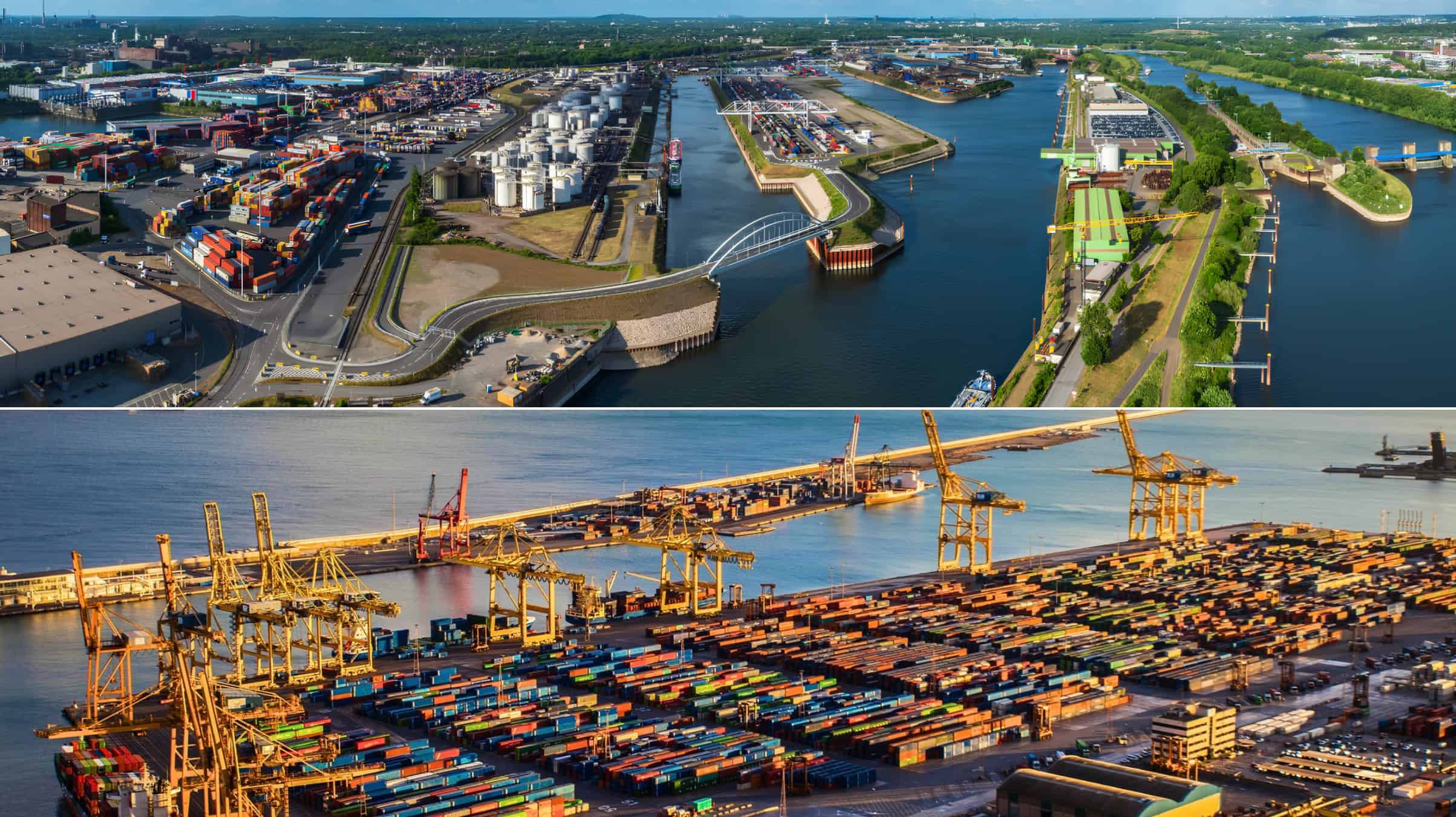
When people think of ports, they often associate them with the large container terminals in Hamburg, Bremerhaven, or Wilhelmshaven. It is often overlooked that Germany has a dense network of more than 100 inland ports that play a central role in supplying industry, trade, and logistics locations. Duisburger Hafen AG is the largest inland port in the world. It handles over 100 million tons per year across all Duisburg ports, including factory and private ports.
How do seaports function?
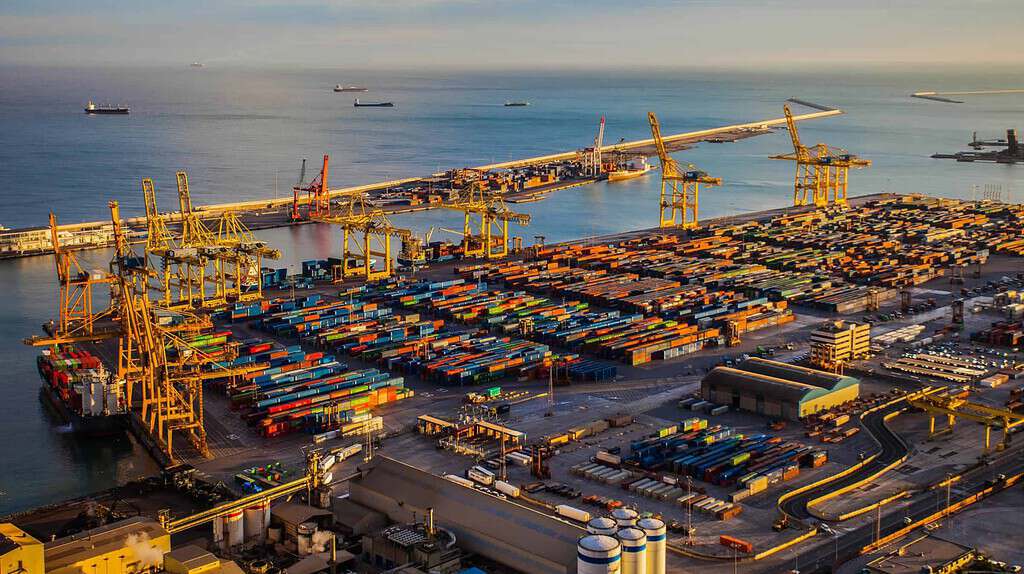
Seaports function as global entry and exit gates for international trade. They are interfaces between intercontinental maritime traffic and national transport networks. Their main task is to handle, store, and subsequently forward import and export goods from all over the world into the hinterland (the interior of the country). The most important German seaports include Hamburg, Bremerhaven, and Wilhelmshaven. They primarily serve large container, bulk, and tanker ships and are directly integrated into global trade routes. The largest seaport in Germany is the Port of Hamburg.
How do inland ports function?
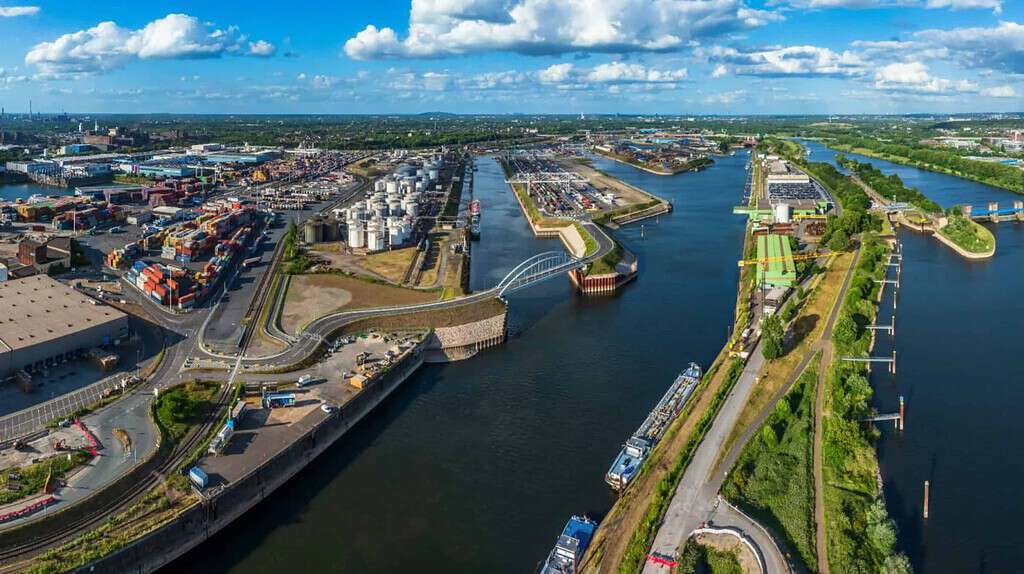
Inland ports, on the other hand, handle the distribution and consolidation of these flows of goods within the interior. They are predominantly located on rivers and canals and serve as logistical hubs between waterways, rail, and road. The trimodal infrastructure of many inland ports is particularly significant here. Thanks to Duisburger Hafen AG, Duisburg connects the Rhine and the Ruhr as waterways with a high-performance rail and road network. This allows goods to be flexibly handled and transported between all three modes of transport.
What is the essential difference?
The essential structural difference thus lies in their function within the supply chain: while seaports receive international flows of goods from overseas and function as global gateways, inland ports handle regional and supra-regional distribution in the hinterland. They are thus the link between the international trade flows of the seaports and the industrial and consumption centers in the interior of the country.
What are the key points of distinction?
Seaport
- Location on coasts and sea access
- Connection to global maritime routes
- Handling of import and export goods
- Processing of ocean-going vessels
- Function as an international trade gateway
- Focus on global flows of goods
Inland Port
- Location on rivers, canals, and inland waters
- Service for inland vessels
- Trimodal linking of waterway, rail, and road
- Supply of industrial and economic regions
- Function as a hinterland hub and distribution center
- Focus on national and continental distribution of goods
What is Green Logistics?
Green Logistics refers to the environmentally friendly design of transport, storage, and logistics processes with the aim of reducing CO₂ emissions, energy consumption, and resource waste. This involves the use of low-emission modes of transport, alternative drives, efficient route planning, and sustainable warehouse concepts, among other things.
How is Green Logistics implemented in seaports?
Seaports focus on the sustainable design of global transport chains. This includes the use of lower-emission technologies in port operations, shore power for ships, alternative fuels, and the shifting of goods to rail and inland waterways in hinterland traffic. The goal is to reduce emissions along international supply chains.
Wie werden Green Logistics in Binnenhäfen durchgesetzt?
Inland ports achieve Green Logistics primarily through their function as trimodal logistics centers. They enable the efficient switch from road to rail and inland waterway, thereby reducing truck traffic. In addition, they bundle flows of goods, shorten transport routes, and promote resource-efficient distribution in the hinterland.
- Seaports: Focus on sustainable international transport chains and low-emission port infrastructure.
- Inland ports: Focus on modal shift, bundling of goods, and efficient hinterland logistics.
Conclusion
Both seaports and inland ports fulfill important but different tasks within logistical networks. While seaports, as international hubs, enable global trade and promote Green Logistics primarily through sustainable handling and transport concepts, inland ports ensure the efficient distribution, networking, and forwarding of goods in the hinterland, thus making an important contribution to high-performance and future-ready supply chains.
Sources:
The National Port Strategy for Sea and Inland Ports
Port Logistics and Port Strategy of the Future – Fraunhofer IML