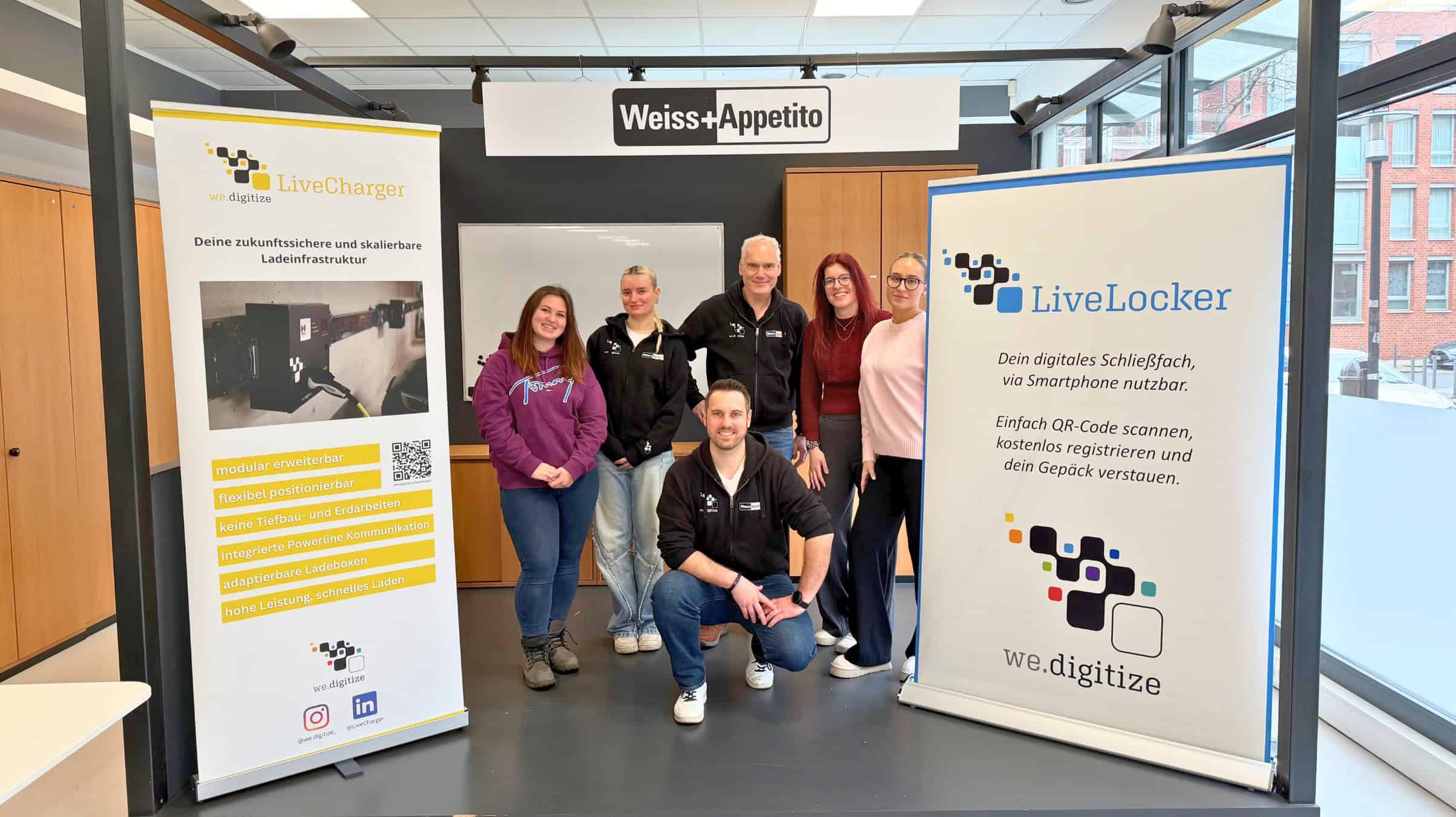
Essen, June 30, 2026 – Maurice Simkins and Walter Daumann shape the digital business division at Weiss+Appetito, specifically the we.digitize brand. As Head of Digitalization, Maurice Simkins is responsible for developing and operating the technical systems as well as the digital infrastructure. Walter Daumann leads we.digitize as Managing Director, combining the traditional heritage of Weiss+Appetito with a clear focus on modern technologies and innovative solutions. Together, they work to establish and further develop new digital business areas within the corporate group.
How are Weiss+Appetito and we.digitize connected, and how did the name we.digitize come about?
Walter Daumann: “Weiss+Appetito is a Swiss company with a long tradition. The company primarily specializes in construction and construction services and now also operates various divisions, including a telecommunications department that plans and builds mobile and fixed networks for major network operators. Through this telecommunications division, I repeatedly came into contact with Weiss+Appetito in the mobile communications sector. When I was eventually asked whether I would like to work for the telecommunications division, I said that I didn’t want to focus solely on mobile communications, and there was also the required relocation to Switzerland. Then I was asked if I had another idea, and together with Maurice, the plan emerged to create a second pillar, a completely new digital business area—something in the field of IoT and digital solutions. The response was simply: Make it successful, and you can do it.”
Daumann and Simkins: “Starting with initial projects such as digital electricity meters and later electromobility, we quickly realized that we had developed a system that allows devices such as charging stations or heating solutions to be controlled completely remotely.
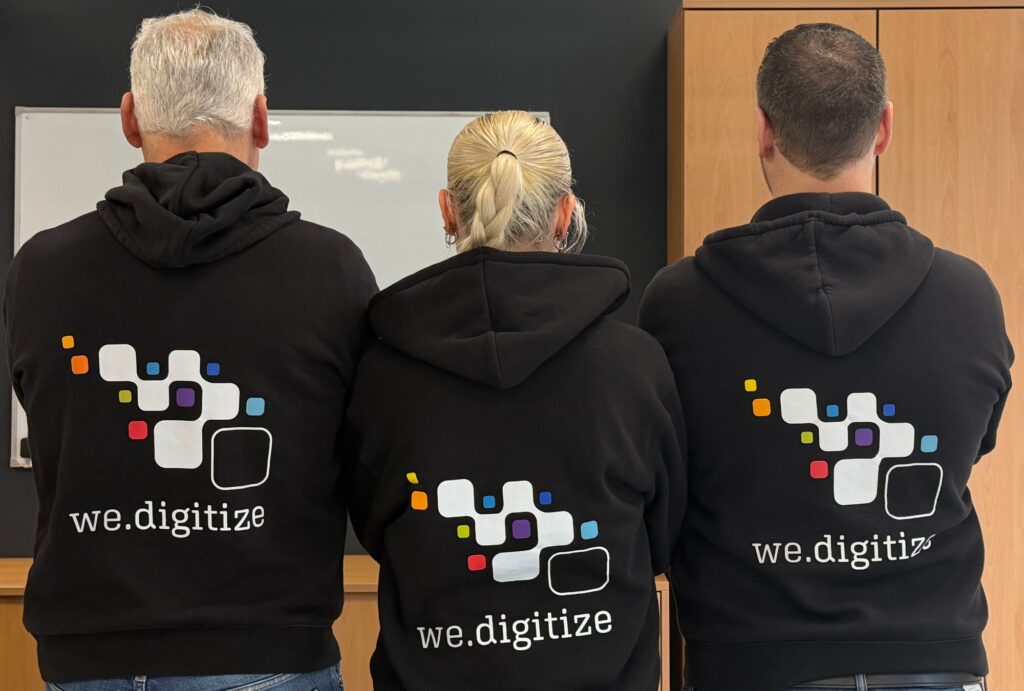
In a workshop, we condensed all these ideas into a shared identity. When we realized that we are fundamentally digitizing, the name we.digitize was born—deliberately designed like an element from code, fitting our digital focus. The logo also reflects our vision: the dynamic tail represents innovation and creativity, while the colored boxes symbolize the individual Live products.”
What best describes your company?
Maurice Simkins: “A traditional company with a strong foundation, yet with an open mindset for innovative products and projects.”
Walter Daumann: “Here, tradition meets innovation, and that is truly an unbeatable combination.”
What exactly should one imagine your product LiveLocker to be?
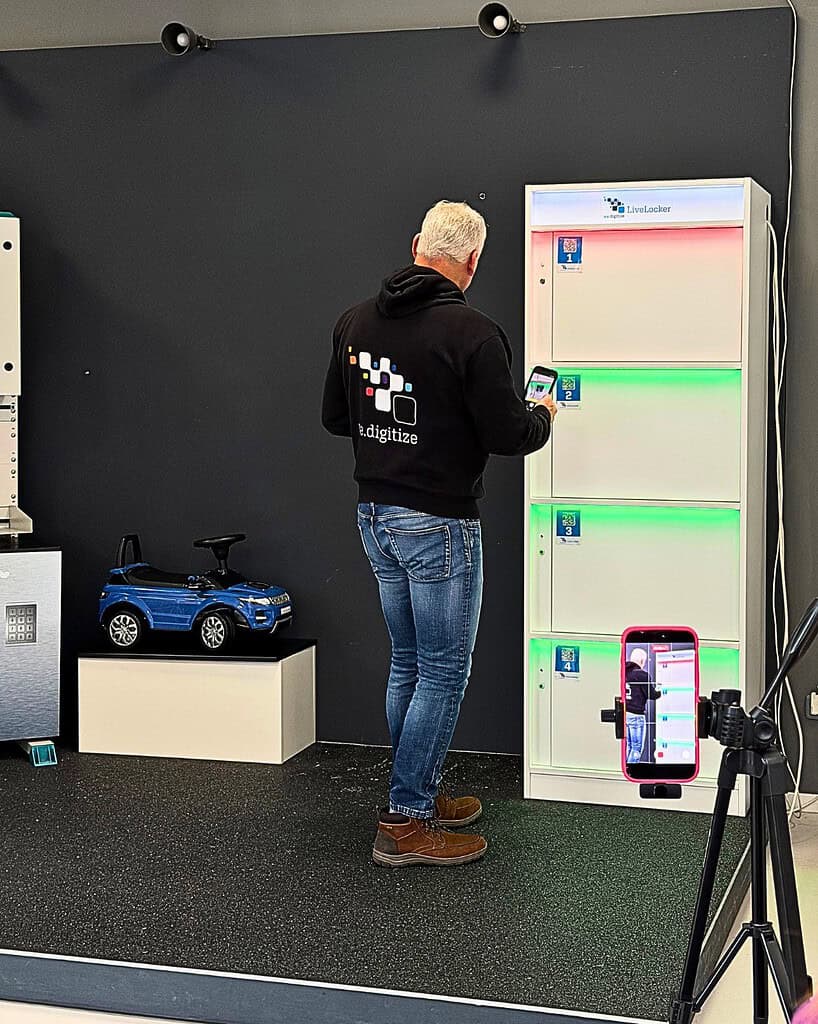
Maurice Simkins: “The LiveLocker is a fully digital locker system that operates without keys or coin mechanisms and is controlled via smartphone. Users can open, book, or reserve lockers in advance at any time, which offers a significant advantage especially in locations with high visitor traffic such as trade fairs. At the same time, the LiveLocker serves as a flexible technology platform through which operators can centrally control their system, configure it, set opening hours, or activate energy-saving functions.”
What makes the LiveLocker so special?
Maurice Simkins: “The system enables additional functions such as click and collect, where items are deposited in a locker and digitally released for pickup. Temporary opening is also possible without ending the booking. For schools, clubs, or similar institutions, a group lock is available, allowing all lockers to be locked simultaneously. For locations where smartphones cannot be used during operation, such as swimming pools, a terminal solution with code entry has been developed.”
For which situations is the LiveLocker designed?
Maurice Simkins: The LiveLocker is designed for situations where items need to be securely stored or flexibly transferred. This includes classic use cases such as fitness studios, where personal belongings are securely locked away. In retail, for example at bakeries, the system enables click-and-collect processes: orders can be prepared, deposited in a locker, and picked up even after closing time. For environments such as swimming pools, where smartphones cannot be used during operation, a terminal solution with code entry is available.
At heavily frequented trade fairs, the LiveLocker offers a particular advantage: lockers can be reserved in advance, and already booked lockers can be opened temporarily without ending the current booking—ideal for storing flyers, bags, or purchases in between. Furthermore, the system is also suitable for airports, where items that cannot be taken on the plane must be securely deposited. With various locker sizes, including standardized trolley dimensions, the LiveLocker covers a wide range of modern usage scenarios.
You have a second product on the market: The LiveCharger—What is it?
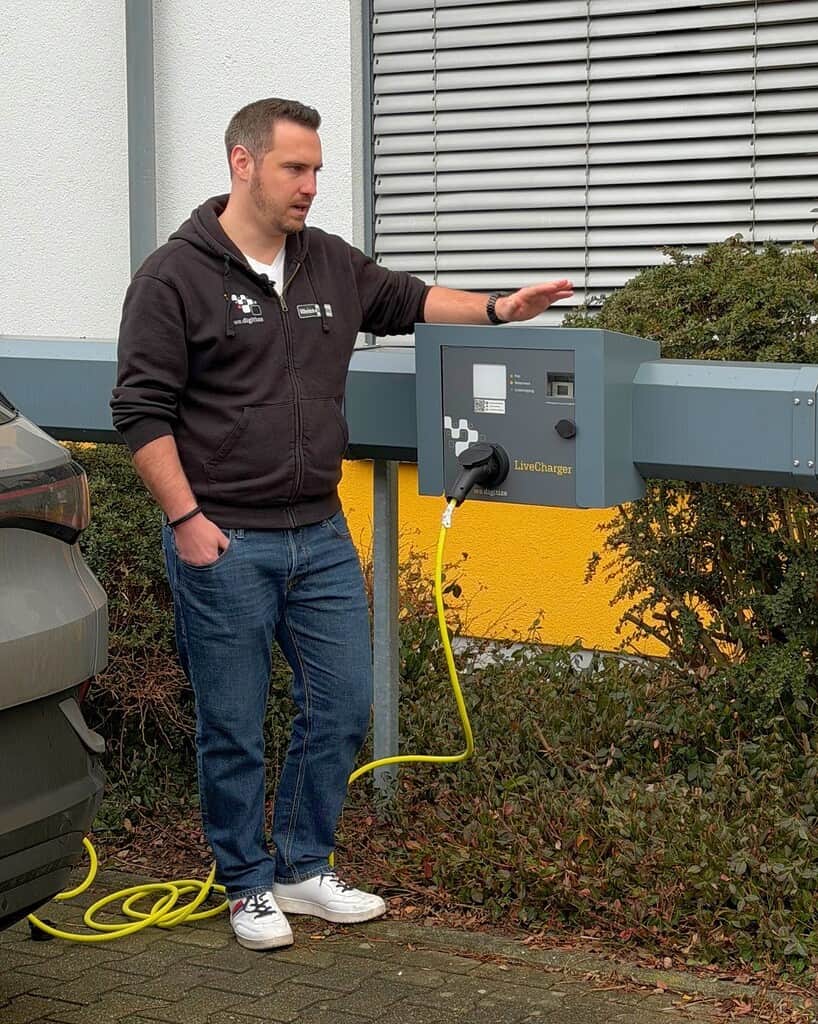
Walter Daumann: “The LiveCharger is a fully integrated charging station embedded in a flexible power rail, providing a solution to one of the biggest problems in electromobility, as conventional charging infrastructure is often expensive, inflexible, and difficult to plan. The power rail functions like a pre-configured energy cable and enables companies to quickly expand or adapt charging points. This makes the LiveCharger particularly suitable for customers who need not just a single station but scalable charging areas and do not yet know whether they need to plan for five or ten charging points.”
At which locations is the LiveCharger already in use, and where can it be installed?
“One example is the Port of Duisburg (duisport), where the company has installed several of our charging points.”
Walter Daumann: “The system is already in use in many European cities, including locations in Germany, Switzerland, Austria, and France. One example is the Port of Duisburg, where the company has installed several of our charging points. The cost of a single station corresponds to market-standard prices but becomes particularly efficient once a larger number is installed, as the infrastructure can be expanded like a modular system. The power rail delivers not only energy but also communication, eliminating the need for additional LAN cables or SIM cards. New charging points can be added at any time during ongoing operation by using the existing rail and simply replacing the cover. LiveCharger is also flexibly installable, whether freestanding or wall-mounted, and can be supported by a load management system when grid capacity is limited.”
What could the future of the LiveCharger look like?
Maurice Simkins: “After successfully operating with our own single station for several years, we have decided to pursue the development of a dual station. Additionally, in recent months we have conducted successful pilot projects in which we connect DC stations directly to existing infrastructure. For this, we use a junction box that does not look like a classic charging station but serves as a connection point. From there, we cable to the DC station, which significantly shortens the cable run and thereby reduces costs.”
In which areas do you see yourselves in the future?
Maurice Simkins: “The future development path lies primarily in expanding the LiveLocker and security sector. Precisely because a wide variety of items must be securely stored today, a broad field of new applications opens up—above all in the area of micromobility. Modern e-bikes have batteries that need to be charged regularly, which directly connects two needs: secure storage and charging technology. The LiveLocker is already equipped with its own charging technology, and the same combination can be applied to parking spaces for e-bikes or other devices—here we are currently planning the new product LiveBiker.”
“The LiveLocker is already equipped with its own charging technology, and the same combination can be applied to parking spaces for e-bikes or other devices—here we are currently planning the new product LiveBiker.”
From this connection, synergies emerge between different usage scenarios—such as the secure storage of valuables, charging infrastructure for mobile devices, or the combination of both functions in a modular system. It is precisely at these intersections between security, charging technology, and digital platform logic that the company sees its future: solutions that go far beyond classic lockers and open up new, hybrid application areas.