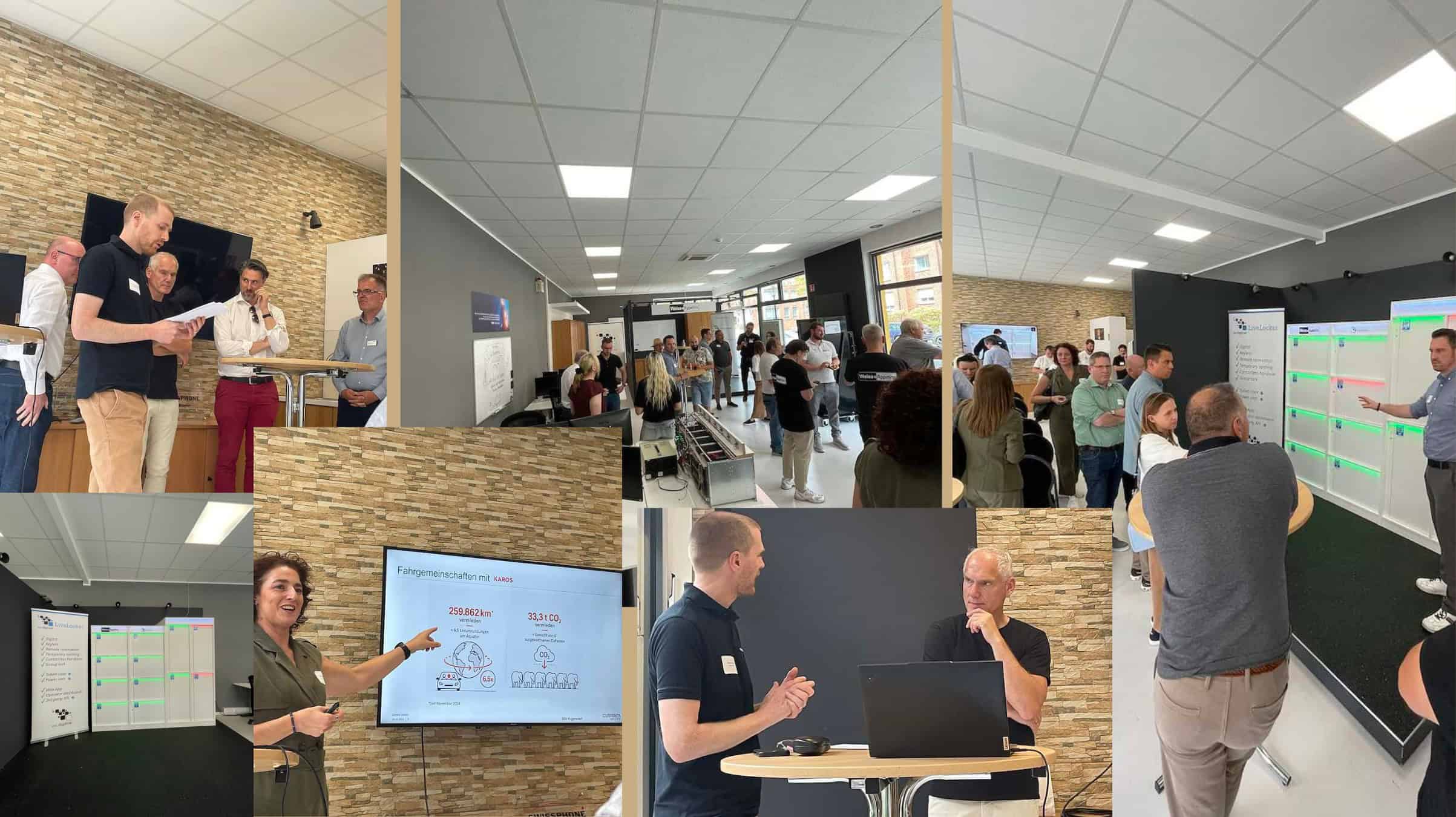
At the we.digitize Summit by Weiss+Appetito Services and startport on July 7, 2026, the central question was how digital technologies can make infrastructure simpler, more efficient, and more future-proof. In presentations, practical examples, and a panel discussion, experts from business, science, and public infrastructure discussed the opportunities and challenges of digitalization – from AI applications and critical communication networks to future mobility solutions.
The key insight of the afternoon: Digitalization unfolds its greatest added value where it reduces complexity and supports people in their daily lives.
Digitalization with Real Added Value
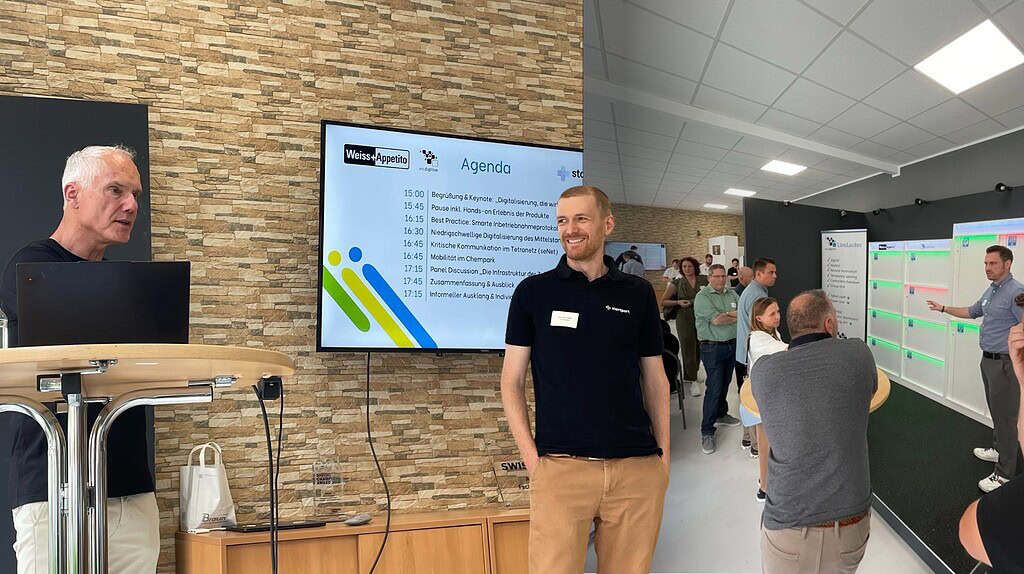
Following the welcome by Johannes Franke from startport and Dr. Walter Daumann from Weiss+Appetito Services, the keynote “Digitalization that truly helps.” opened the thematic framework of the event. The focus was on how digital infrastructure must be designed so that it does not become an end in itself, but rather creates actual improvements for companies, municipalities, and users.
It became clear that digitalization has long gone far beyond classic IT projects. New technologies open up numerous possibilities to make processes more transparent, efficient, and user-friendly. At the same time, the demands on networking, data usage, and the collaboration of different stakeholders are increasing.
As Dr. Walter Daumann emphasized:
“We are convinced that digitalization holds the power for a simplified life.”
Practical Examples Show Concrete Applications
After a networking break with the opportunity to try out various solutions and products directly, the focus shifted to concrete application cases.
Philipp Hennig from aiconver demonstrated how artificial intelligence can automate administrative processes and relieve employees using smart commissioning protocols. The presented solutions illustrated how AI already contributes to quality improvement and efficiency enhancement in operational processes today.
Subsequently, Stefan Bahrs spoke about low-threshold digitalization in SMEs. It became clear that successful digitalization does not necessarily require large investments or complex transformation programs. Often, the greatest added value comes from pragmatic solutions that specifically improve existing processes and support employees in their daily work.
Critical Infrastructure and Communication in the Digital Age
Another key focus was the importance of reliable communication systems. Stefan Reinhardt from STEAG provided insights into the use of the Tetra network for critical communication and showed the requirements for high-performance and fail-safe infrastructures.
The presentation made it clear how important resilient communication structures are, especially for critical infrastructures and public institutions. At the same time, it became apparent that increasing digitalization brings new demands for security, availability, and networking.
Following this, Sandra Gierlich from Currenta, in her presentation “Mobility in Chempark,” showed how digital infrastructure is increasingly becoming the foundation for modern mobility concepts. Topics such as intelligent control, networking, and load management are gaining increasing importance, particularly in the context of electromobility, and are becoming crucial components of a future-proof infrastructure.
The Infrastructure of the Future is Connected
The highlight of the afternoon was the panel discussion “The Infrastructure of the Future.” Prof. Dr. Hannes Rothe (University of Duisburg-Essen), Dr. Walter Daumann (Weiss+Appetito Services), Oliver Keßelheim (Wirtschaftsbetriebe Duisburg), and Stefan Reinhardt (STEAG) jointly discussed future developments and necessary framework conditions.
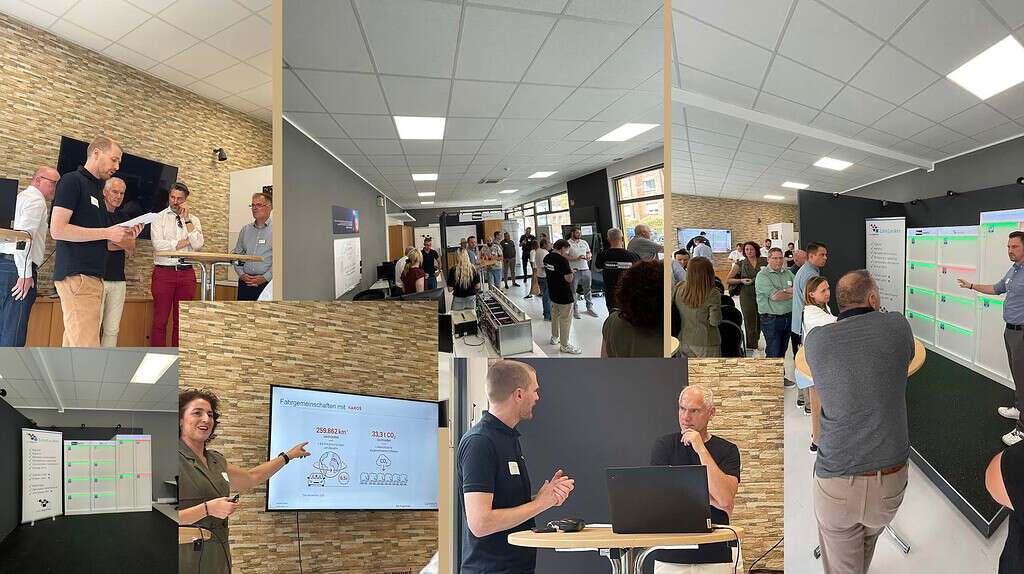
The discussion focused on questions regarding the role of data, artificial intelligence, public infrastructure, and the collaboration of different stakeholders. It became clear that technological innovations offer enormous potential, but at the same time raise new societal questions.
The discussion highlighted that while technological possibilities are continuously growing, responsibility, security, and the active shaping of digital transformation must increasingly come into focus. There was agreement that the infrastructure of the future can only be successfully shaped through the interplay of business, science, and public administration.
Conclusion
The we.digitize Summit at startport impressively demonstrated that digitalization is far more than the introduction of new technologies. Successful digital infrastructure emerges where innovation, practical applicability, and collaboration come together.
In addition to the diverse practical examples and expert impulses, the intensive exchange among participants was a central element of the event. Appropriately, Dr. Walter Daumann summarized the most important insight of the day:
“Ultimately, networking among ourselves is important – only then can we learn from each other.”
Together with Weiss+Appetito Services, startport provided a platform for exchange on future-proof infrastructure, innovative technologies, and new forms of collaboration. The event made it clear that the challenges of digitalization can only be mastered together – and the opportunities are greater than ever.